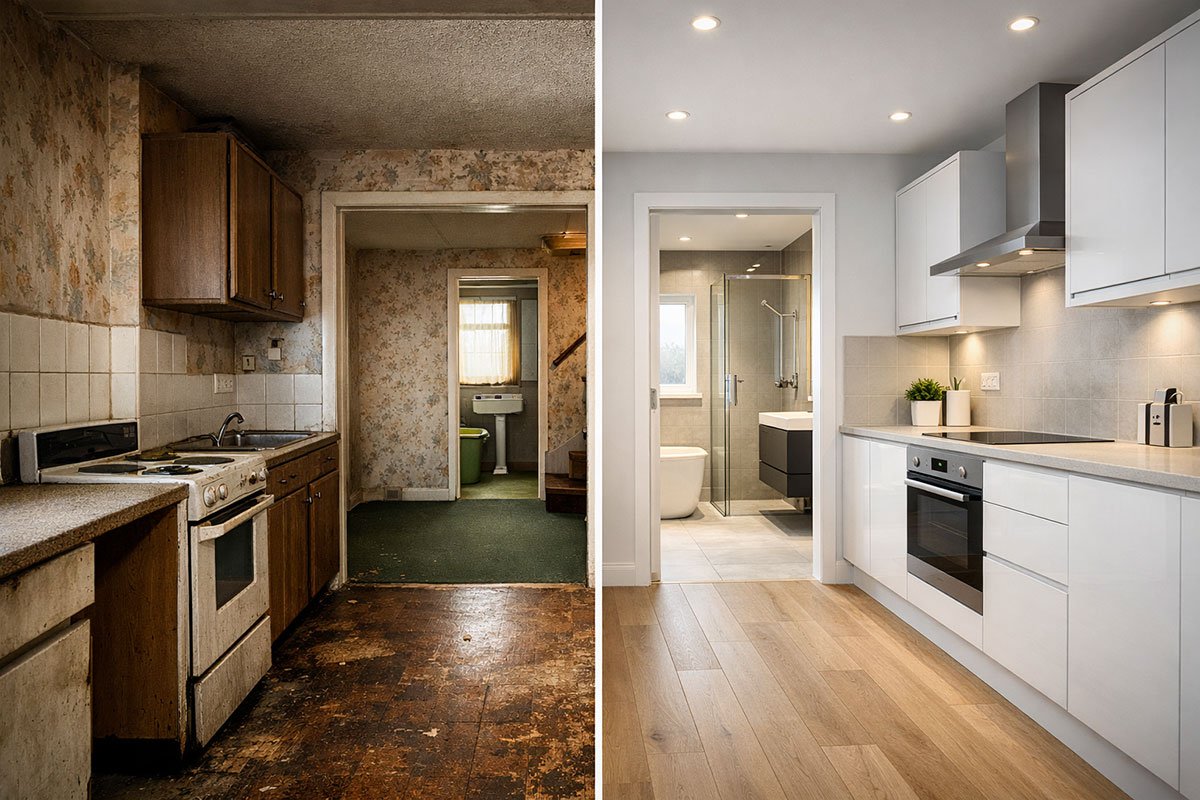
Are you a homeowner planning to give your property a makeover, or a property investor looking to increase the value of your rental portfolio? Perhaps you want to transform an outdated property into a modern, energy-efficient home that appeals to buyers or tenants.
This complete guide to property refurbishment in the UK walks you through everything you need to know — from costs and timelines to common mistakes to avoid and how to choose the right refurbishment company. Whether you’re upgrading your own home or maximising return on investment, this guide will help you refurbish with confidence.
What Is Property Refurbishment?
Property refurbishment is the process of renovating, upgrading, or modernising an existing building to improve its appearance, functionality, energy efficiency, and value.
Refurbishment projects can range from light cosmetic upgrades to full structural renovations involving major rebuilding works. The scope depends on the condition of the property, your budget, and your long-term goals.
Types of Property Refurbishment
Cosmetic Refurbishment
A light-touch refurbishment focused on visual improvements such as painting, flooring, new fixtures, and minor repairs. Ideal for refreshing tired properties or preparing homes for sale or rent.
Partial Refurbishment
A mid-level refurbishment that upgrades specific elements of a property, such as kitchens, bathrooms, windows, roofing, plumbing, or electrical systems.
Full Property Refurbishment
A complete transformation involving structural alterations, extensions, layout changes, and major rebuilding work. This is often chosen for older or neglected properties requiring a full modern upgrade.
Benefits of Property Refurbishment
Increase Property Value
A professionally refurbished property can significantly increase market value and attract higher-quality buyers or tenants.
Improve Energy Efficiency
Upgrading insulation, glazing, heating systems, and lighting can reduce energy consumption, improve EPC ratings, and lower utility bills.
Enhance Comfort & Functionality
Modern layouts, improved lighting, and updated fixtures make homes more practical, comfortable, and enjoyable to live in.
Increase Rental Yield
For landlords, refurbishment can justify higher rental prices, reduce void periods, and attract long-term tenants.
Property Refurbishment Costs in the UK
Property refurbishment costs vary depending on several key factors:
-
Size and complexity of the project
-
Quality of materials and finishes
-
Location and local labour costs
-
Age and condition of the property
Typical UK Cost Ranges
-
Low-end refurbishment: £20–£50 per sq ft
-
Mid-range refurbishment: £50–£100 per sq ft
-
High-end or luxury refurbishment: £100+ per sq ft
These figures are indicative and should always be confirmed with a professional site survey and detailed quotation.
Property Refurbishment Timeline
Planning
Initial surveys, budgeting, design planning, and identifying any planning permission or building control requirements.
Design & Approvals
Detailed drawings, specifications, and submission of required approvals to local authorities where necessary.
Build Phase
The construction phase, which may take several weeks to several months depending on project complexity.
Final Inspections
Snagging, compliance checks, and final inspections to ensure work meets required standards.
Common Property Refurbishment Mistakes to Avoid
-
Underestimating costs: Always allow a contingency budget
-
Poor planning: Rushed designs lead to delays and overspending
-
Choosing the wrong contractor: Lack of experience can cost more in the long run
-
Ignoring regulations: Non-compliant work can cause legal and resale issues
Choosing the Right Property Refurbishment Company
When selecting a refurbishment company, look for:
-
Experience: Proven track record in UK property refurbishment
-
Transparency: Clear pricing, timelines, and communication
-
Insurance & Compliance: Full insurance cover and adherence to building regulations
-
References: Genuine reviews and completed project examples
Frequently Asked Questions (FAQ)
How long does property refurbishment take?
Most projects take between a few weeks and several months, depending on scope and complexity.
How much does property refurbishment cost in the UK?
Costs typically range from £20 to £100+ per square foot, depending on specification and location.
Can I refurbish a property myself?
Small cosmetic works can be DIY, but structural, electrical, and plumbing work should always be handled by professionals.
Is full property refurbishment worth it?
Yes — especially for older properties, where refurbishment can significantly increase value, efficiency, and usability.
Do I need planning permission for refurbishment?
Not always. Many refurbishments fall under permitted development, but structural changes may require approval.
Get Started with Your Property Refurbishment Project
Don’t let your property’s potential go unrealised. Whether you’re refurbishing your home or upgrading an investment property, professional guidance makes all the difference.
Contact us today for a free consultation or quotation and take the first step towards a smarter, more valuable property.
Download Our Free Property Refurbishment Guide
Looking for deeper insights? Download our free property refurbishment guide packed with expert advice, budgeting tips, and planning checklists to help you refurbish with confidence.