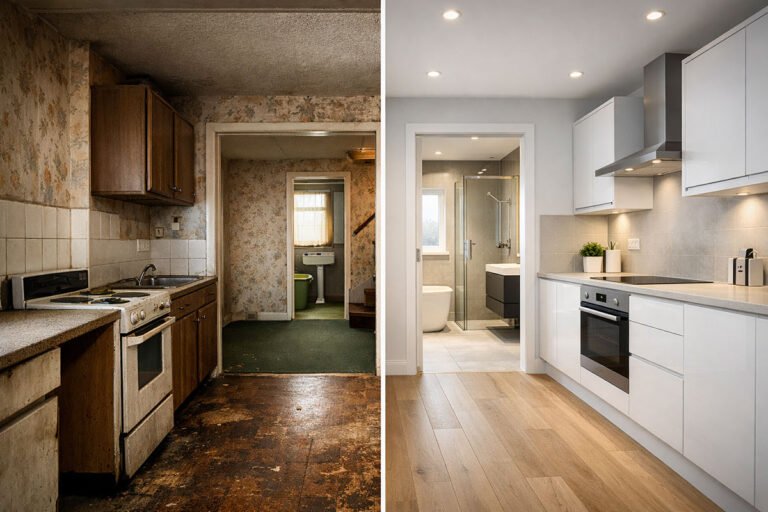

10 Property Defects That Quietly Reduce Rental Value
A Practical Checklist for Landlords
Rental properties rarely lose value because of one major problem. More often, it’s a series of small defects that gradually increase repair costs, reduce tenant satisfaction, lower EPC ratings, and make the property less attractive to future tenants.
Use this checklist to identify issues before they become expensive.
1. Hidden Damp & Moisture
Signs to look for
- Peeling paint
- Musty smell
- Black mould
- Damp patches
- Bubbling plaster
Why it matters
Unchecked moisture damages decorations, timber and insulation while creating an unhealthy living environment. It is also one of the biggest reasons tenants make complaints.
Risk: ★★★★★
2. Roof Defects
Signs to look for
- Missing tiles
- Damaged flashing
- Moss build-up
- Internal water staining
- Sagging gutters
Why it matters
Small roof defects often lead to significant water damage if ignored.
Risk: ★★★★★
3. Blocked Gutters & Poor Drainage
Signs to look for
- Overflowing gutters
- Standing water
- Green staining
- Damp external walls
- Eroded brickwork
Why it matters
Poor drainage is one of the leading causes of penetrating damp.
Risk: ★★★★☆
4. Poor Ventilation
Signs to look for
- Condensation on windows
- Mould around bathrooms
- Damp wardrobes
- Persistent humidity
Why it matters
Modern airtight homes need adequate ventilation to prevent moisture problems and improve indoor air quality.
Risk: ★★★★☆
5. Heat Loss & Poor Insulation
Signs to look for
- Cold rooms
- High energy bills
- Drafts
- Uneven temperatures
Why it matters
Poor thermal performance increases running costs, affects tenant comfort and can reduce EPC ratings.
Risk: ★★★★☆
6. External Wall Deterioration
Signs to look for
- Cracked render
- Damaged pointing
- Loose brickwork
- Water staining
- Vegetation growth
Why it matters
External defects allow moisture into the building fabric, leading to costly structural repairs over time.
Risk: ★★★★☆
7. Aging Kitchens & Bathrooms
Signs to look for
- Worn worktops
- Damaged sealant
- Loose tiles
- Water leaks
- Outdated fittings
Why it matters
These are among the first areas prospective tenants notice and often influence rental demand.
Risk: ★★★☆☆
8. Electrical & Safety Issues
Signs to look for
- Damaged sockets
- Old consumer unit
- Inadequate lighting
- Missing smoke alarms
- Outdated electrical installation
Why it matters
Safety issues can affect compliance, insurance and tenant confidence.
Risk: ★★★★★
9. Exterior Maintenance
Signs to look for
- Broken fencing
- Damaged paths
- Loose paving
- Overgrown gardens
- Cracked driveways
Why it matters
The exterior creates the first impression and influences perceived property quality before tenants even step inside.
Risk: ★★★☆☆
10. Deferred Maintenance
Signs to look for
- Multiple small defects
- Temporary repairs
- Cosmetic cover-ups
- Persistent tenant complaints
Why it matters
Small problems rarely stay small. Deferred maintenance often results in significantly higher repair costs and increased void periods.
Risk: ★★★★★
Building Health Score
| Area | Status |
|---|---|
| Damp & Moisture | ☐ Good ☐ Monitor ☐ Action Required |
| Roof Condition | ☐ Good ☐ Monitor ☐ Action Required |
| Drainage | ☐ Good ☐ Monitor ☐ Action Required |
| Ventilation | ☐ Good ☐ Monitor ☐ Action Required |
| Insulation & Heat Loss | ☐ Good ☐ Monitor ☐ Action Required |
| External Walls | ☐ Good ☐ Monitor ☐ Action Required |
| Kitchen & Bathroom | ☐ Good ☐ Monitor ☐ Action Required |
| Electrical Safety | ☐ Good ☐ Monitor ☐ Action Required |
| External Areas | ☐ Good ☐ Monitor ☐ Action Required |
| General Maintenance | ☐ Good ☐ Monitor ☐ Action Required |
The Bigness Approach
At Bigness Group, we believe property maintenance is about protecting long-term value—not simply fixing defects as they appear.
Our structured approach helps landlords identify risks early, prioritise improvements, and plan maintenance that protects rental income, reduces unexpected repair costs, and supports long-term asset performance.
Most contractors repair buildings.
Bigness helps protect property assets.
Book a Bigness Building Health Check
Receive a professional assessment covering:
- Damp and moisture risks
- Roof and drainage condition
- Ventilation and heat loss
- EPC improvement opportunities
- External building defects
- Priority maintenance actions
- Retrofit recommendations
- Long-term maintenance planning
Protect your property before small problems become expensive.
Frequently Asked Questions
What reduces the value of a rental property?
The most common causes include damp and mould, roof defects, poor insulation, outdated kitchens and bathrooms, inadequate ventilation, external deterioration, and deferred maintenance. While each issue may seem minor on its own, together they can reduce tenant demand, increase repair costs, and negatively affect long-term property value.
How often should landlords inspect their property?
Landlords should carry out a visual inspection at least every six months, alongside annual maintenance reviews of the roof, gutters, drainage, heating, ventilation, and external walls. Regular inspections help identify problems early before they become costly repairs.
Why is preventative maintenance important for landlords?
Preventative maintenance helps avoid emergency repairs, protects rental income, reduces void periods, improves tenant satisfaction, and extends the life of the building. Addressing small defects early is almost always more cost-effective than waiting for them to become major problems.
Can small defects really become expensive?
Yes. A blocked gutter can lead to penetrating damp, damaged plaster, timber decay, and mould growth. A loose roof tile can become a roof leak requiring extensive internal repairs. Small maintenance issues often escalate quickly if left unresolved.
What are the early signs of damp and moisture problems?
Look out for:
- Musty odours
- Black mould
- Condensation on windows
- Peeling paint
- Damp patches on walls or ceilings
- Bubbling plaster
- Warped skirting boards
Early investigation can prevent more serious structural damage.
How can landlords improve their property’s EPC rating?
Practical improvements include:
- Upgrading loft and wall insulation
- Installing energy-efficient glazing
- Improving ventilation
- Replacing inefficient heating systems
- Draught-proofing doors and windows
- Installing low-energy lighting
A phased approach often delivers the best return on investment.
What maintenance issues concern tenants the most?
The most common complaints include:
- Damp and mould
- Heating failures
- Roof leaks
- Plumbing issues
- Poor ventilation
- Broken fixtures
- External maintenance
- Slow response to repairs
Keeping on top of these issues improves tenant retention and satisfaction.
Should landlords repair or replace ageing building elements?
It depends on their condition and remaining service life. Temporary repairs can be appropriate in some situations, but repeated repairs often become more expensive than planned replacement. A professional assessment can help prioritise works based on cost, risk, and long-term value.
How can landlords protect their property investment over the long term?
A structured maintenance strategy is the most effective approach. Regular inspections, planned maintenance, energy-efficiency improvements, moisture management, and timely repairs help preserve property value while reducing unexpected costs and supporting long-term rental performance.
How can Bigness Group help?
Bigness Group helps homeowners, landlords, businesses, and property managers protect their assets through planned construction, retrofit, refurbishment, and proactive maintenance.
Our Building Health Check can identify hidden defects, prioritise maintenance, improve energy performance, and help you plan future works before problems become expensive.
Ready to Protect Your Property?
Whether you own a single rental property or manage an entire portfolio, our team can help you identify risks before they become costly repairs.
Book a Building Health Check and receive:
- A professional property assessment
- Photographic defect report
- Priority maintenance recommendations
- Retrofit and EPC improvement opportunities
- Long-term asset protection advice
Protect your property before small problems become expensive.