Communal Heating Recovery Across a Three-Block Residential Development
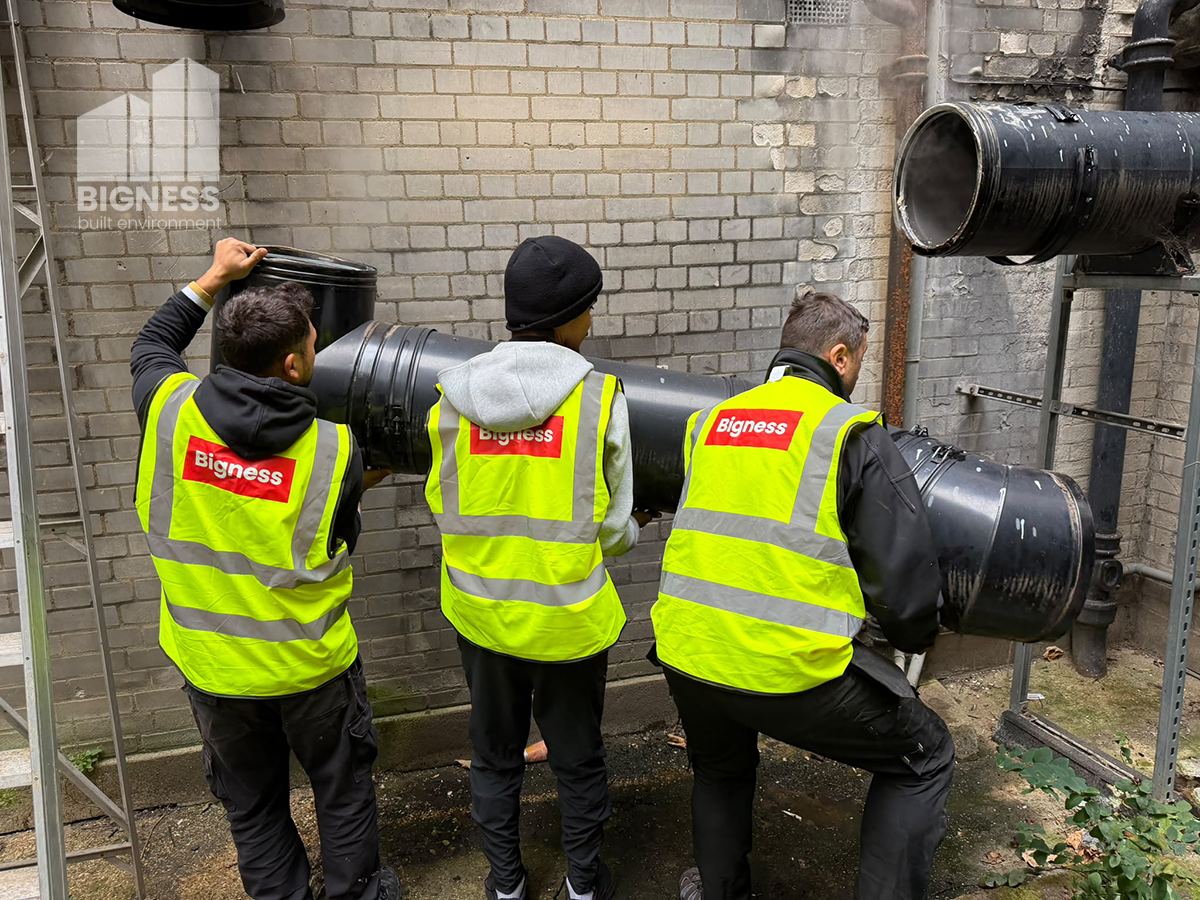
Essential safety repairs, heating recommissioning and a clearer maintenance programme for a managed residential property.
Project Summary
Client Type: RTM company represented by a managing agent
Property Type: Three-block residential development with shared communal services
Location: London
Core Services: Building Maintenance · Building Compliance
Technical Capabilities: Communal Heating · Gas Plant · Flue Systems · Plumbing
Bigness Role: Contractor and Technical Delivery Coordinator
Project Status: Essential works completed; annual maintenance ongoing; further works proposed
The development comprises three residential blocks sharing communal heating and hot-water infrastructure.
The Starting Position
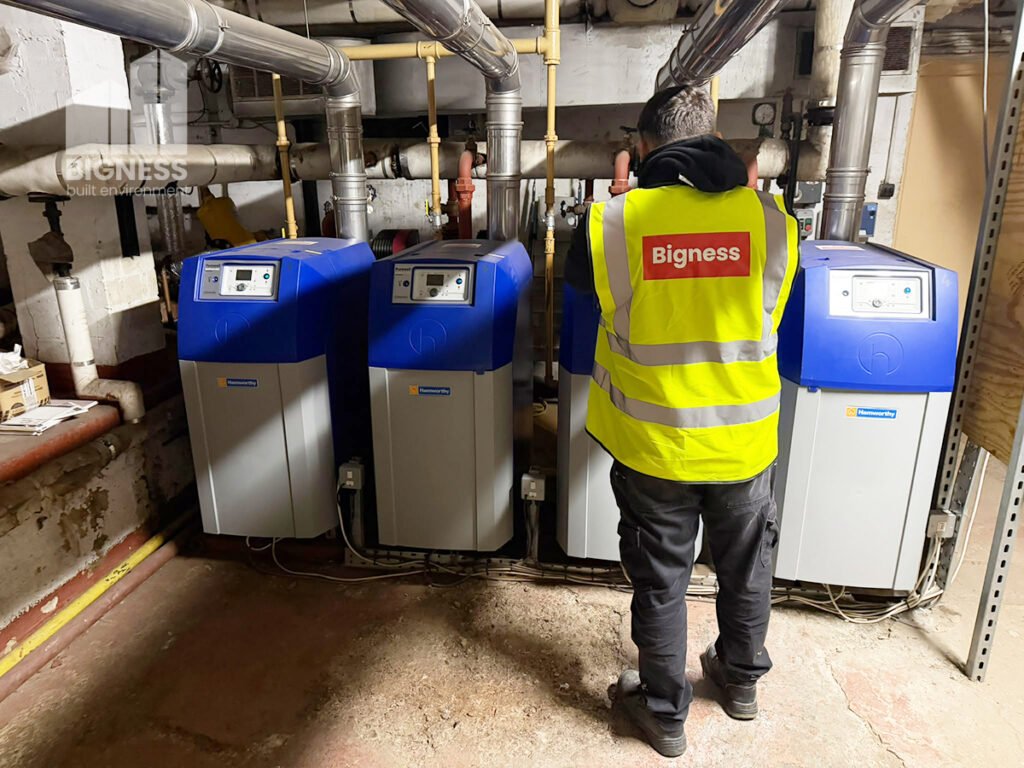
The managing agent appointed Bigness to inspect and service the communal heating and hot-water plant ahead of the heating season.
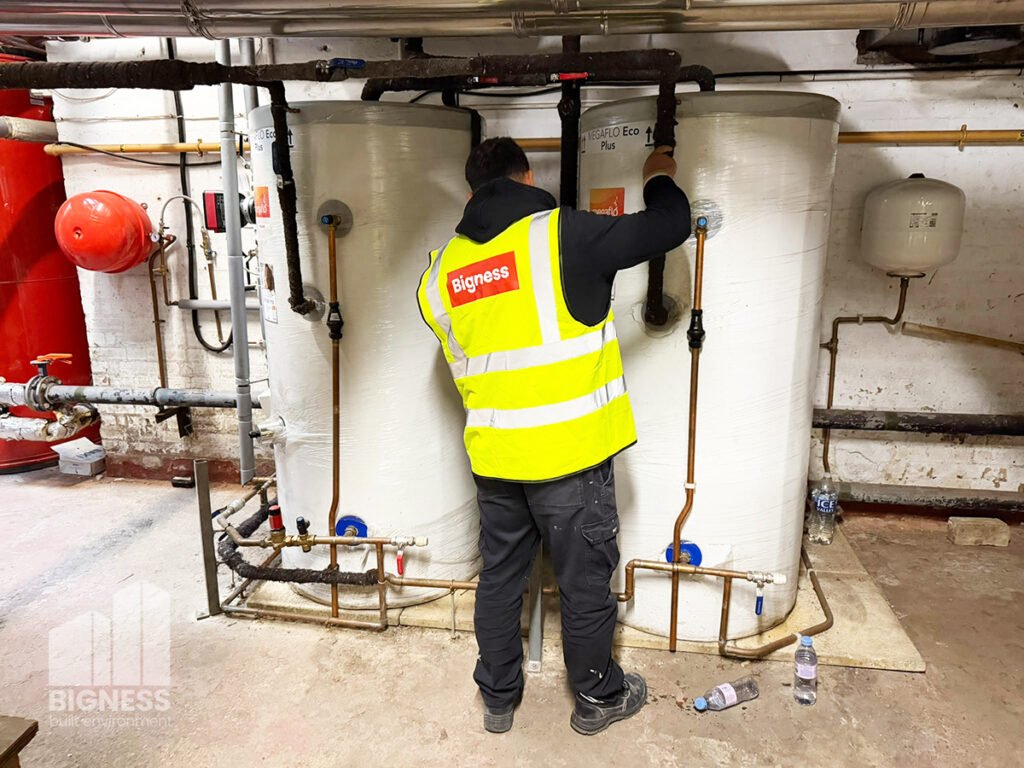
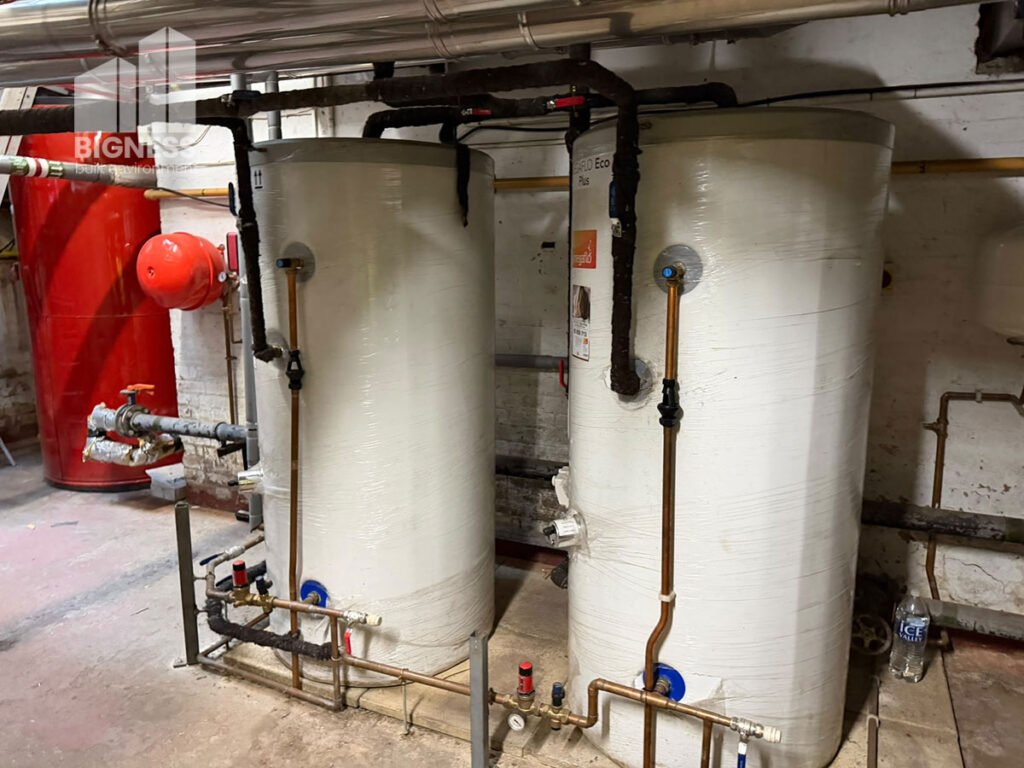
The installation included boilers of different ages, circulation equipment, hot-water storage and roof-level water tanks. Previous concerns around the communal flue arrangement made inspection of the system particularly important.
The initial attendance established the condition of the accessible plant and identified a combination of immediate safety issues, maintenance defects and longer-term improvement requirements.
The requirement was therefore broader than a routine seasonal service.
Bigness needed to establish:
what required immediate attention, what could be repaired, what needed further investigation and what should become part of the building’s longer-term maintenance programme.
What Needed to Be Resolved
The immediate priority was to address gas and flue defects and rectify the flue-safety arrangement associated with one of the boilers.
The wider requirement was to leave the managing agent with a clearer understanding of:
- the condition of the communal plant;
- immediate safety actions;
- outstanding maintenance;
- future system improvements; and
- the next decisions required for the building.
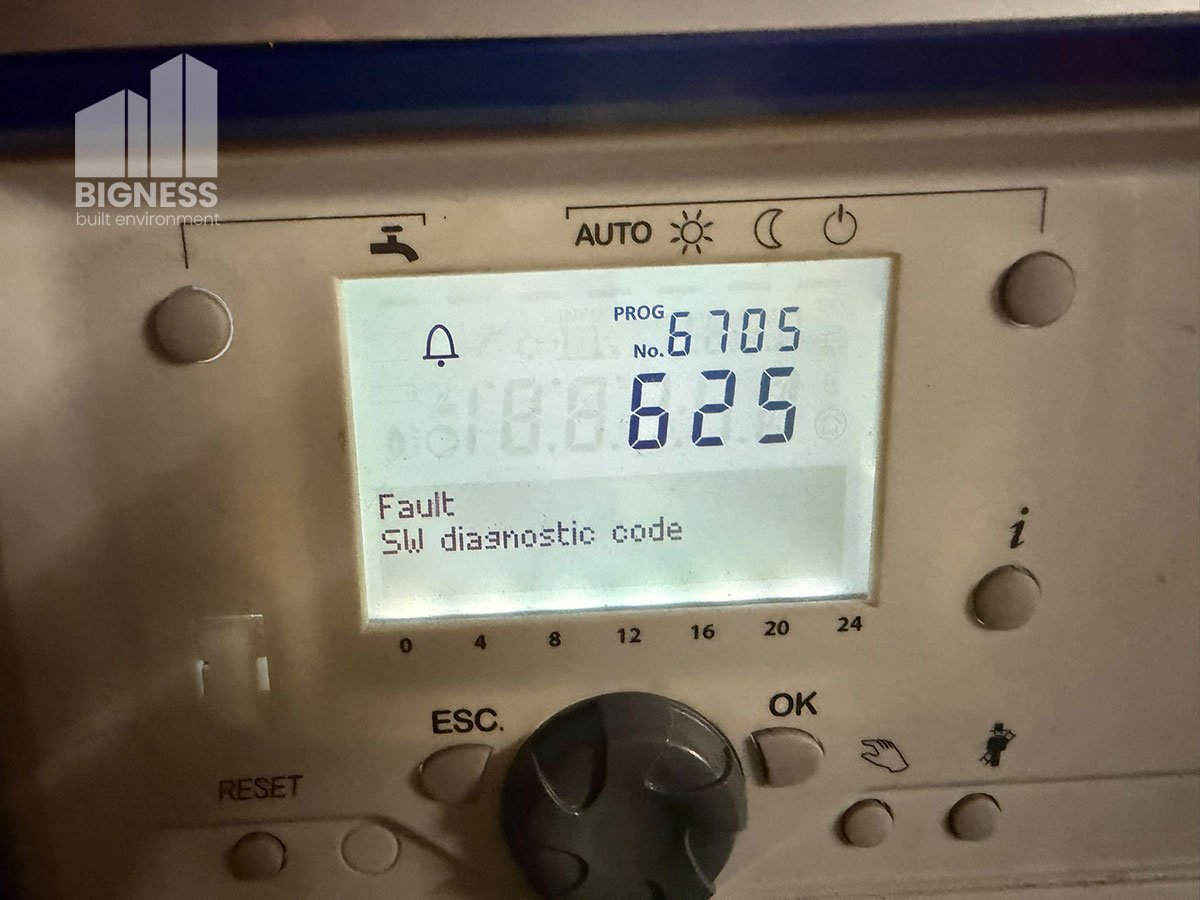
The original attendance identified gas, flue, pump, control, water-pressure and roof-level water-system issues rather than one isolated heating fault.
What Bigness Found
01 — Immediate Gas & Flue Defects
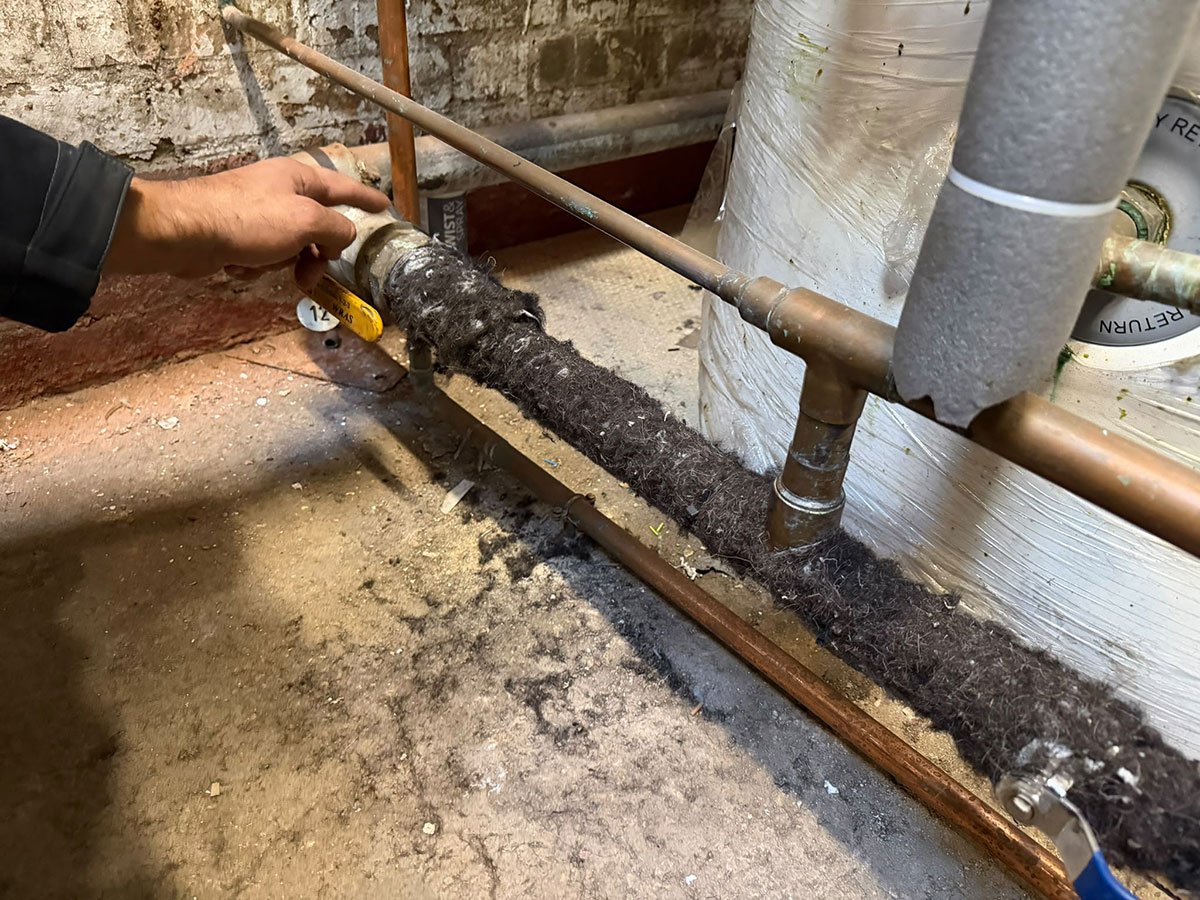
Three gas leakage points required immediate repair.
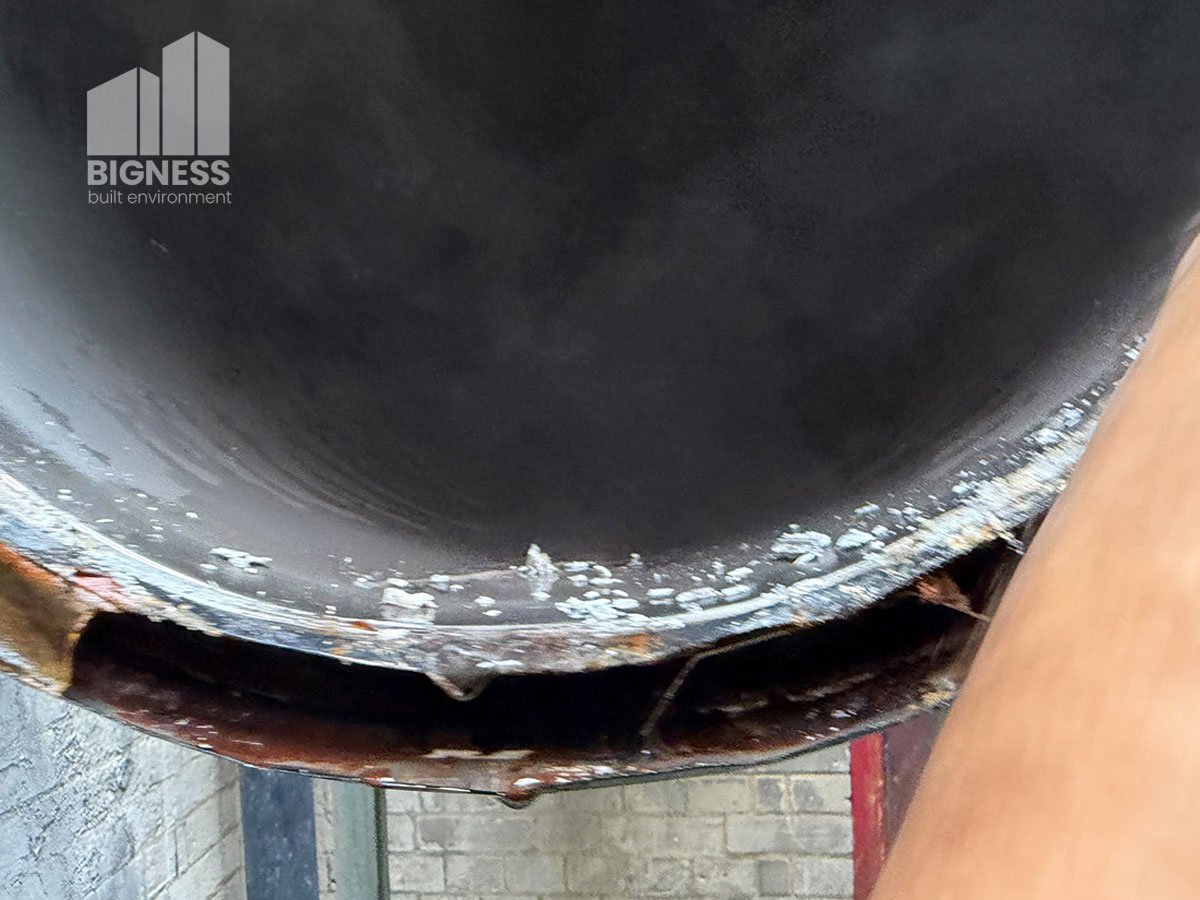
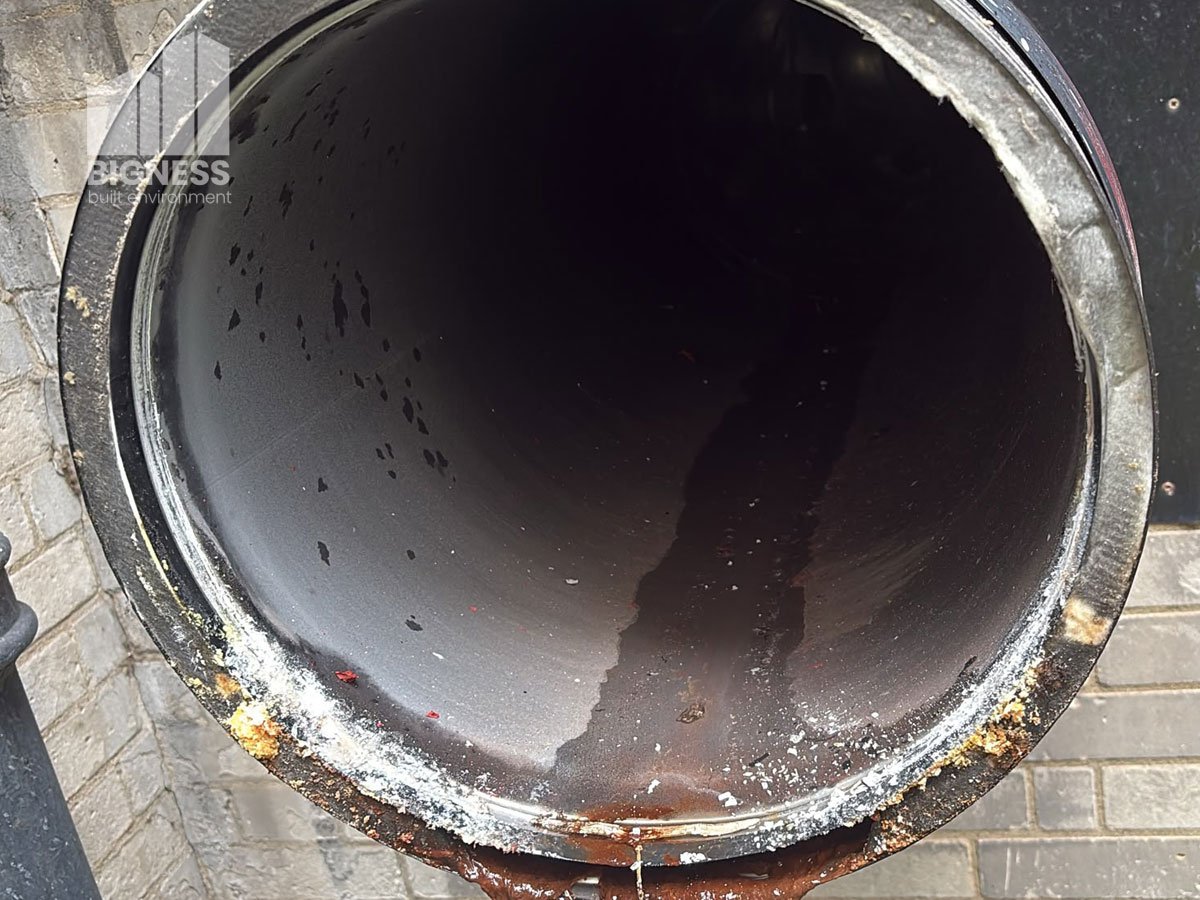
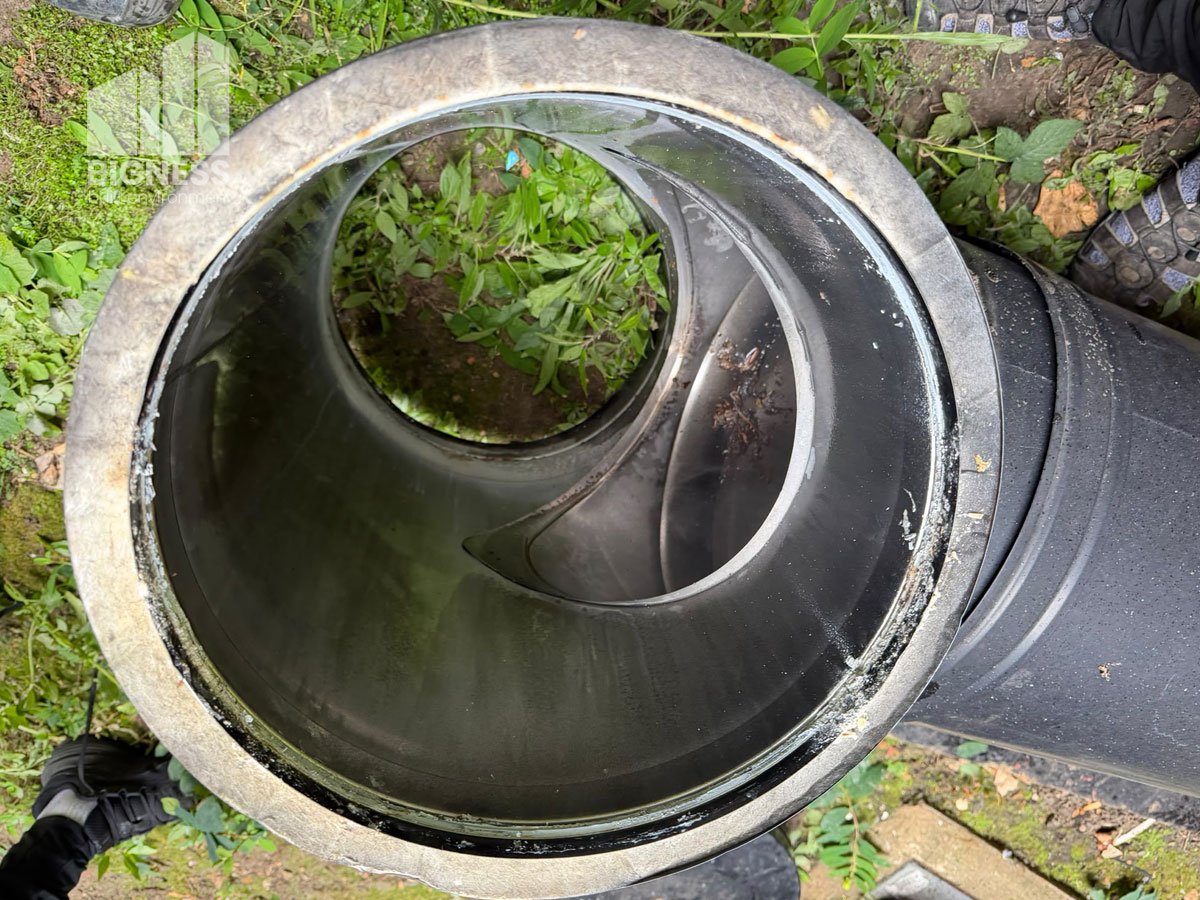
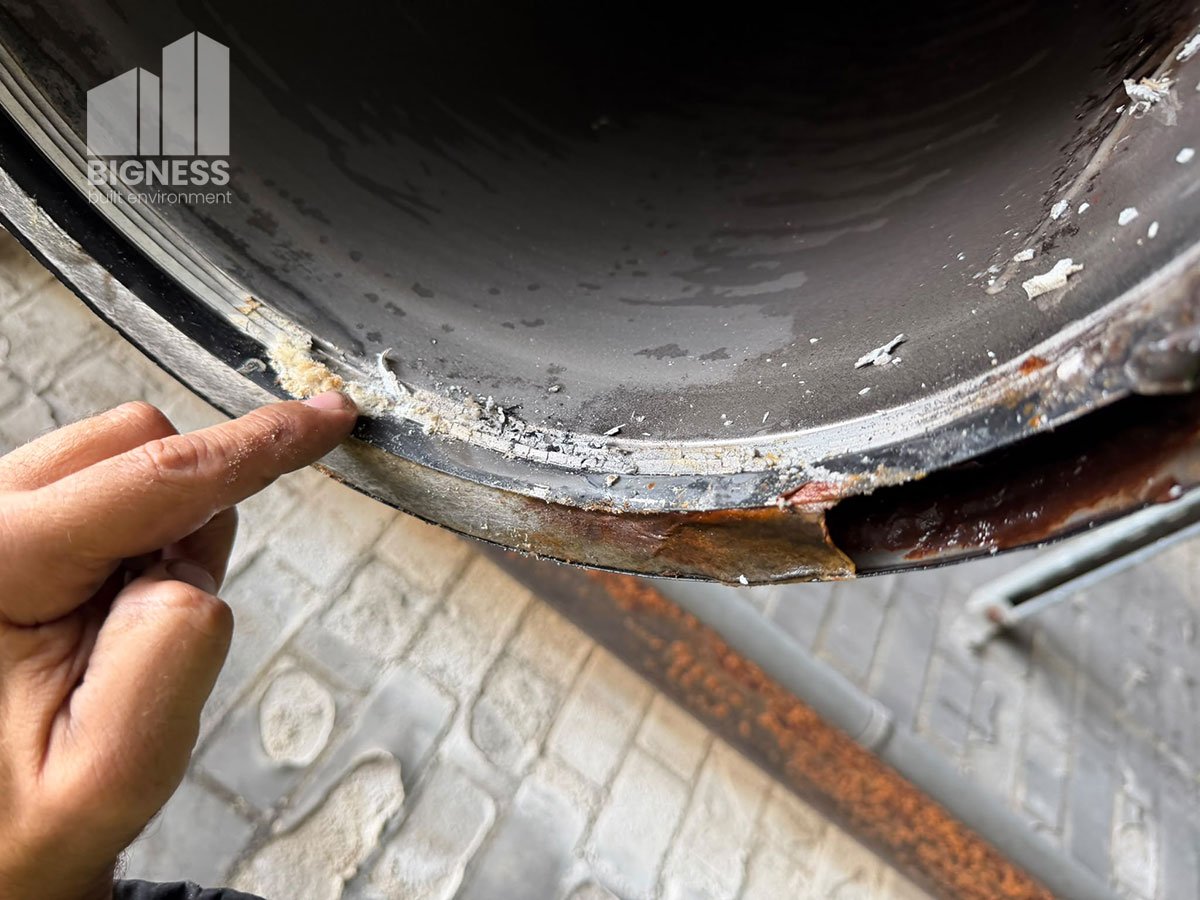
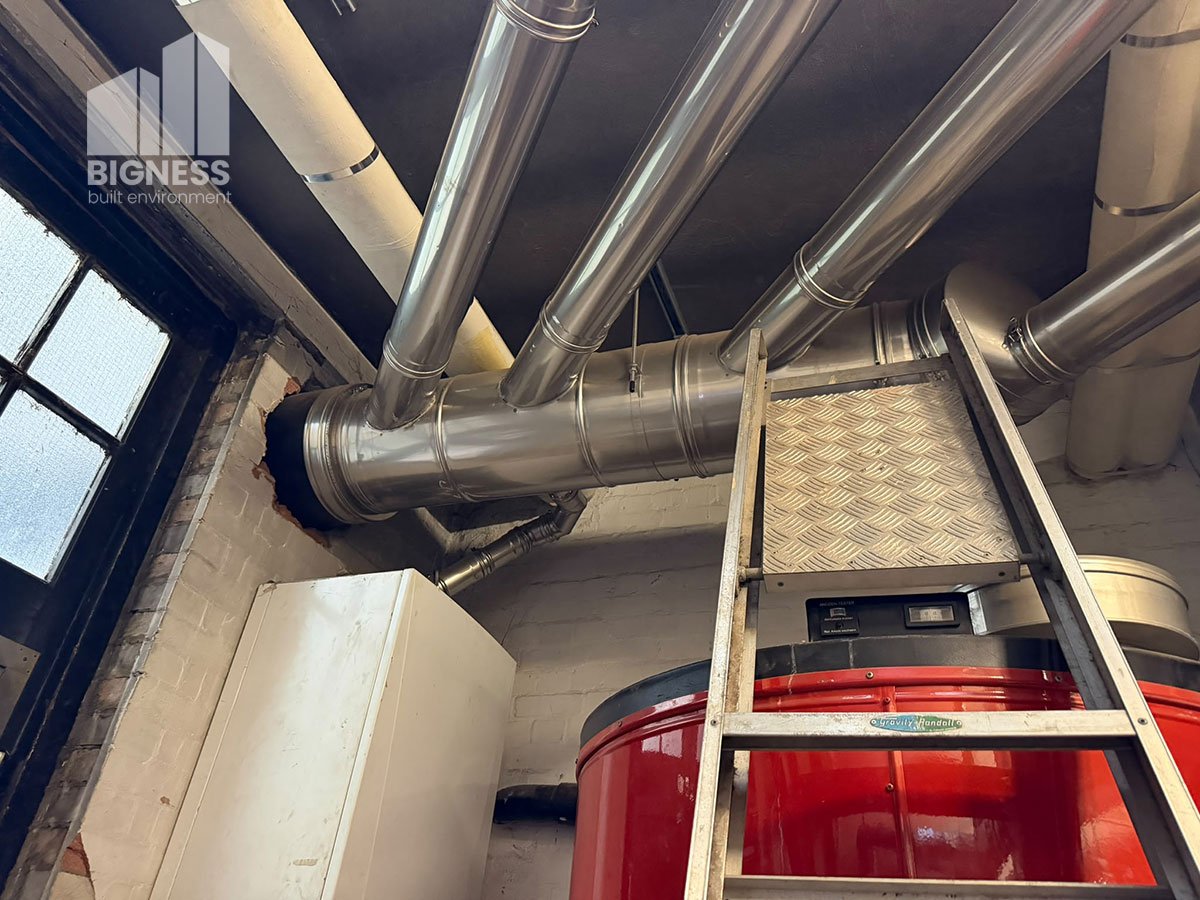
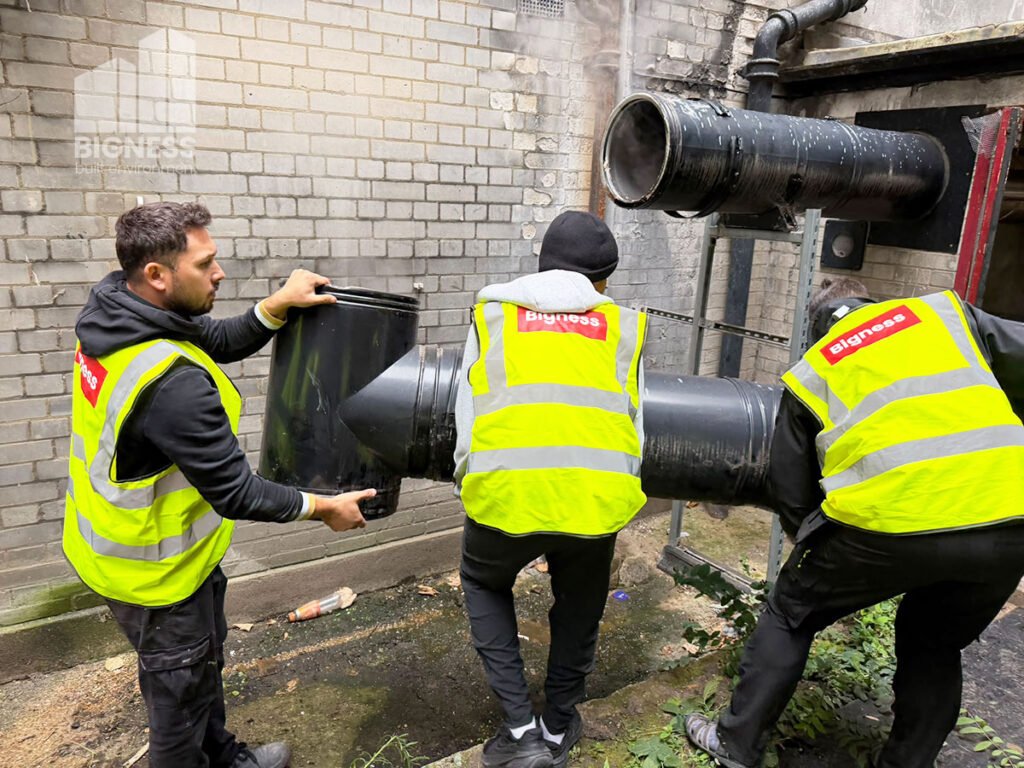
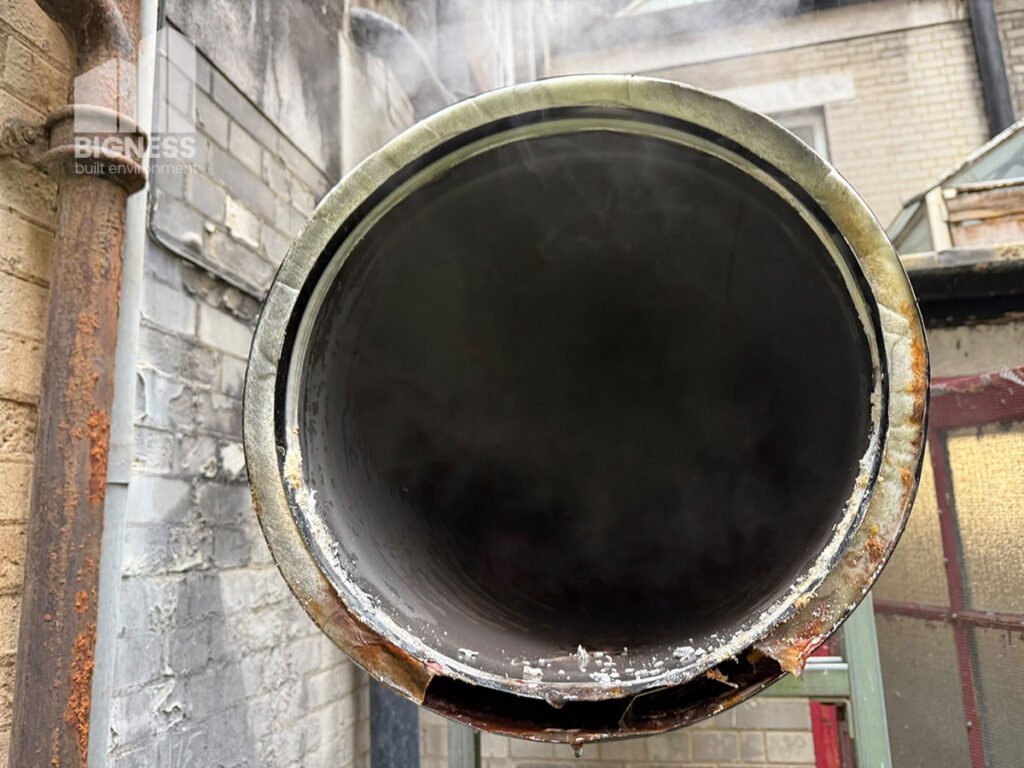
Inspection of the communal flue identified eight defective locations, including deteriorated seals, a defective branch connection and standing water and debris within the accessible lower section.
02 — Boiler Flue-Safety Arrangement
A Potterton Gold WH65 required rectification of its flue-temperature safety arrangement.
The appropriate components had to be confirmed before the repair and subsequent testing could be completed.
03 — Pumps, Controls & Hot Water
The inspection also identified:
- defective pumps;
- a disconnected control head;
- a secondary hot-water motor reported to run continuously;
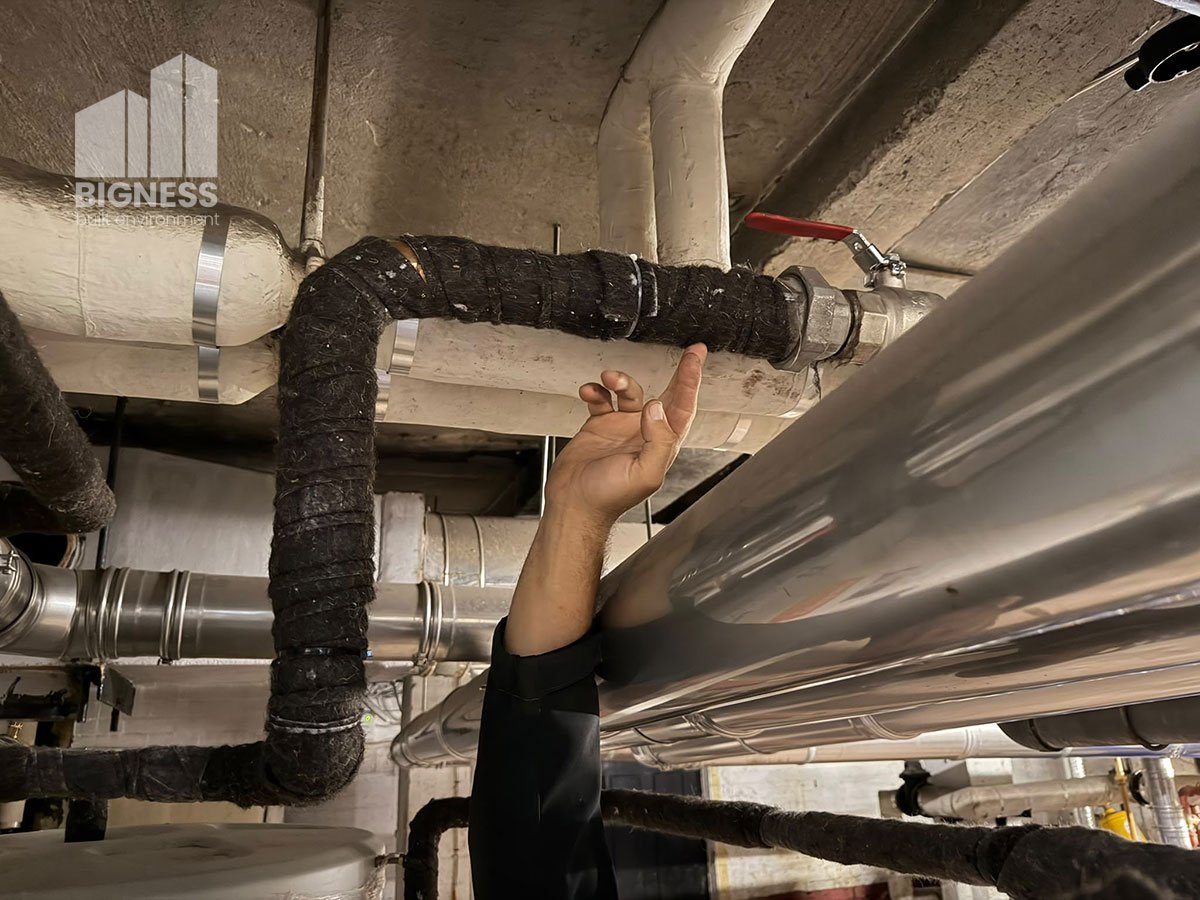
- restricted pipework; and
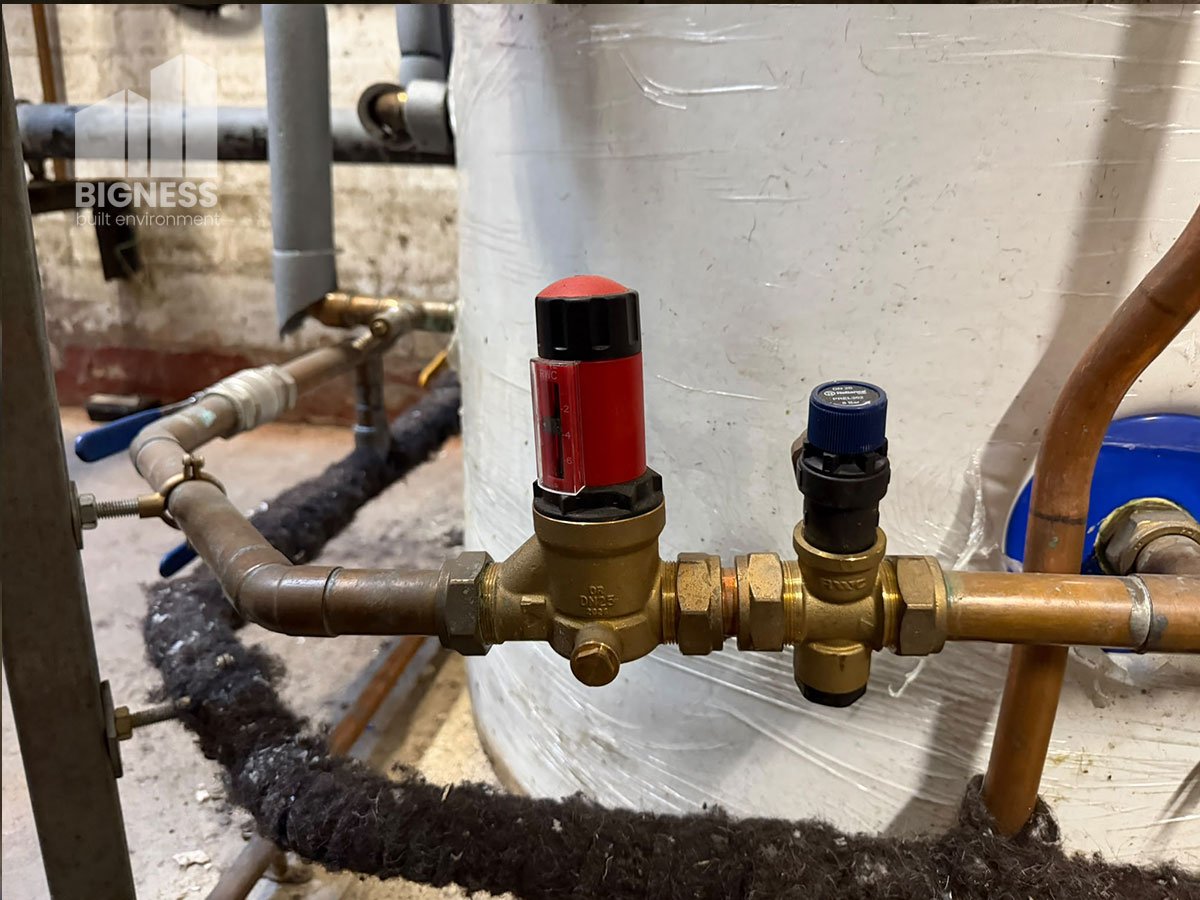
- low water pressure requiring separate investigation.
These issues were separated from the immediate safety package and developed as further maintenance or improvement requirements.
04 — Roof Tanks & External Services
Roof-level water tanks showed condition issues requiring further attention.
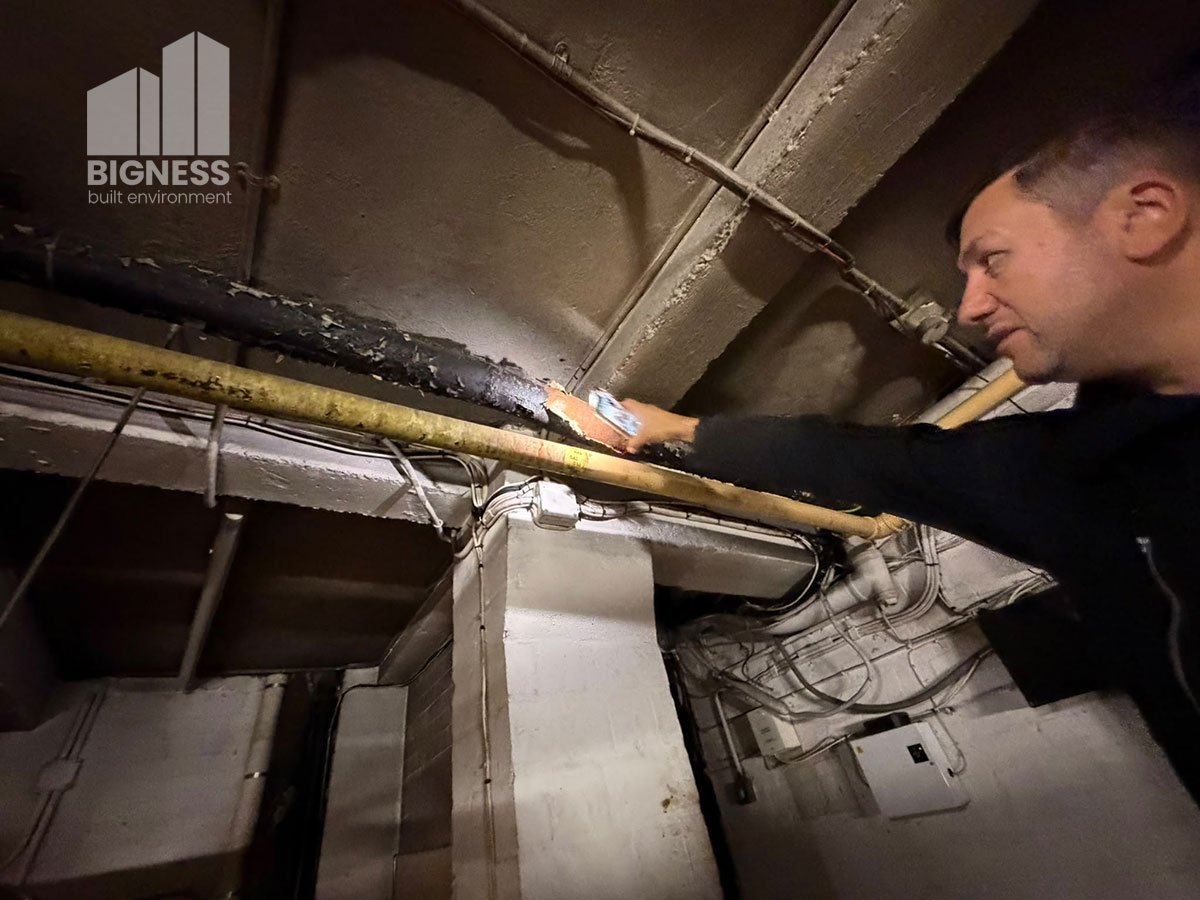
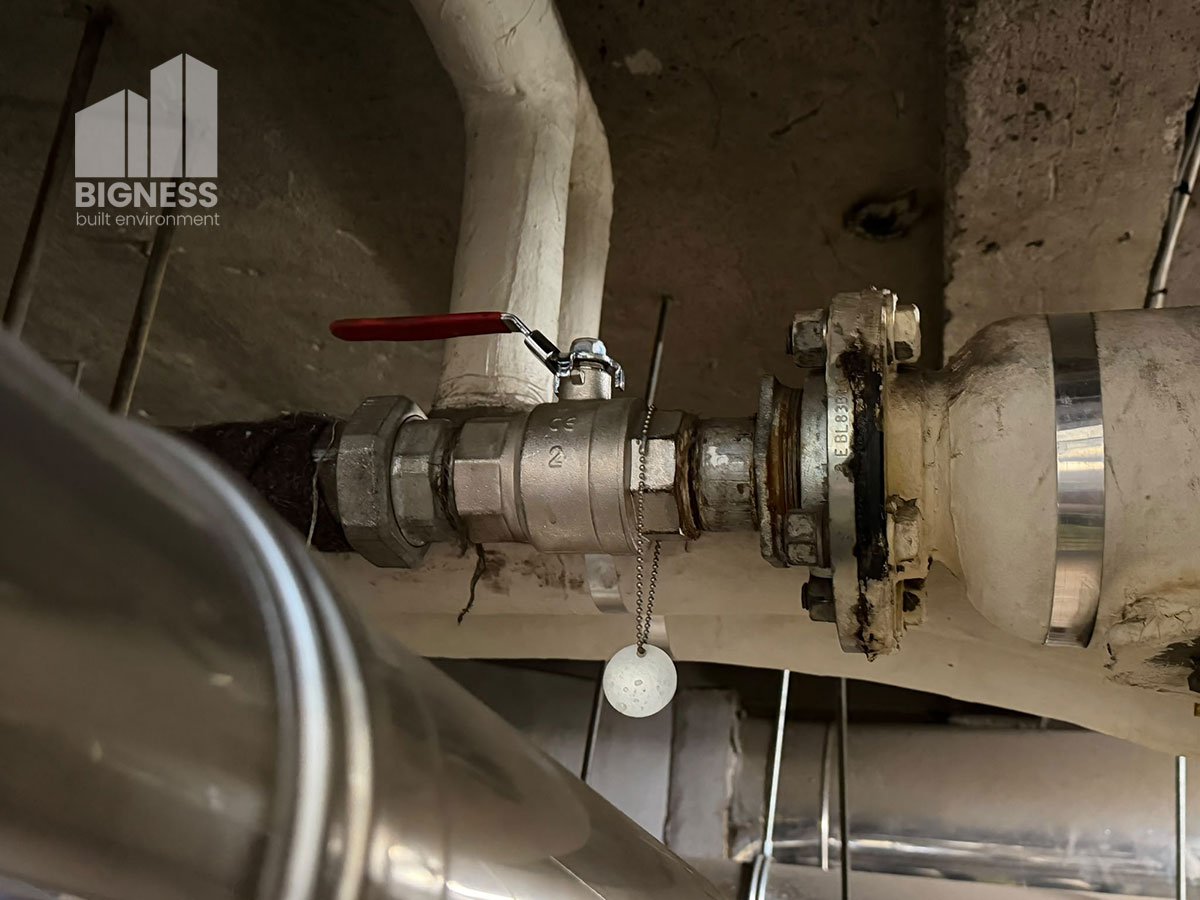
External services also had areas of missing or deteriorated insulation, exposed fittings and degraded supports.
These were recorded as future remedial priorities rather than being lost within the immediate heating repair.
The Bigness Response
Bigness approached the project through the same operating model used across our technical delivery work.
Understand
Inspect the accessible communal plant, understand the operating condition and record the principal assets and defects.
Prioritise
Separate immediate gas and flue requirements from maintenance defects and longer-term building improvements.
Scope
Create a defined essential works package while keeping additional remedial and improvement requirements separately visible.
Coordinate
Organise the Gas Safe registered engineer, repair team, specialist components, access and managing-agent communications.
Deliver
Complete the agreed immediate repairs and accepted communal flue and boiler-safety works.
Verify
Complete the appropriate post-repair inspection and technical testing through the attending Gas Safe registered engineer.
Record
Provide condition information, photographs and clearly identified future actions.
This sequence reflects the actual delivery route recorded for the project.
Work Completed
Initial Inspection & Maintenance
Bigness:
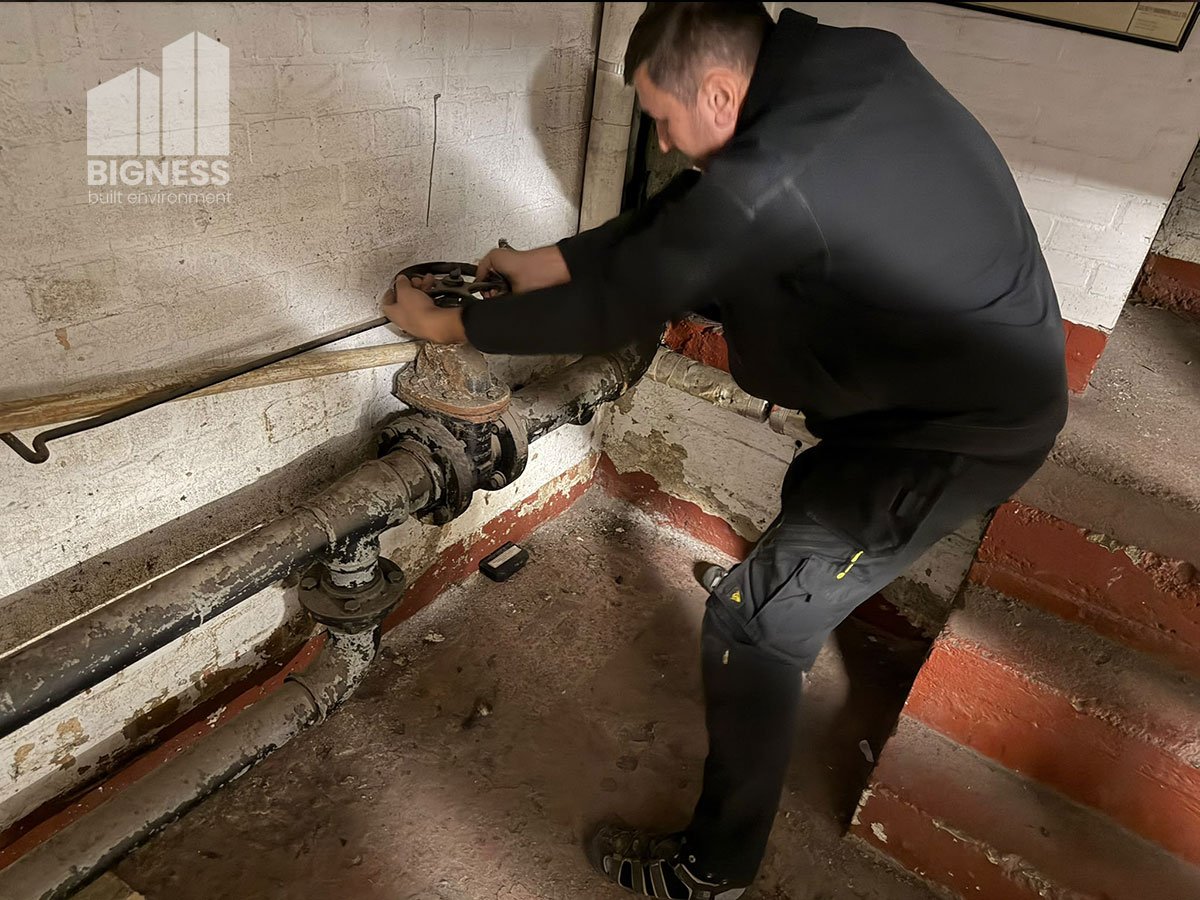
- inspected accessible boilers, flues, pumps, controls, cylinders and associated plant;
- repaired three gas leakage points;
- carried out the associated gas-tightness testing;
- cleaned the accessible lower boiler heat exchanger;
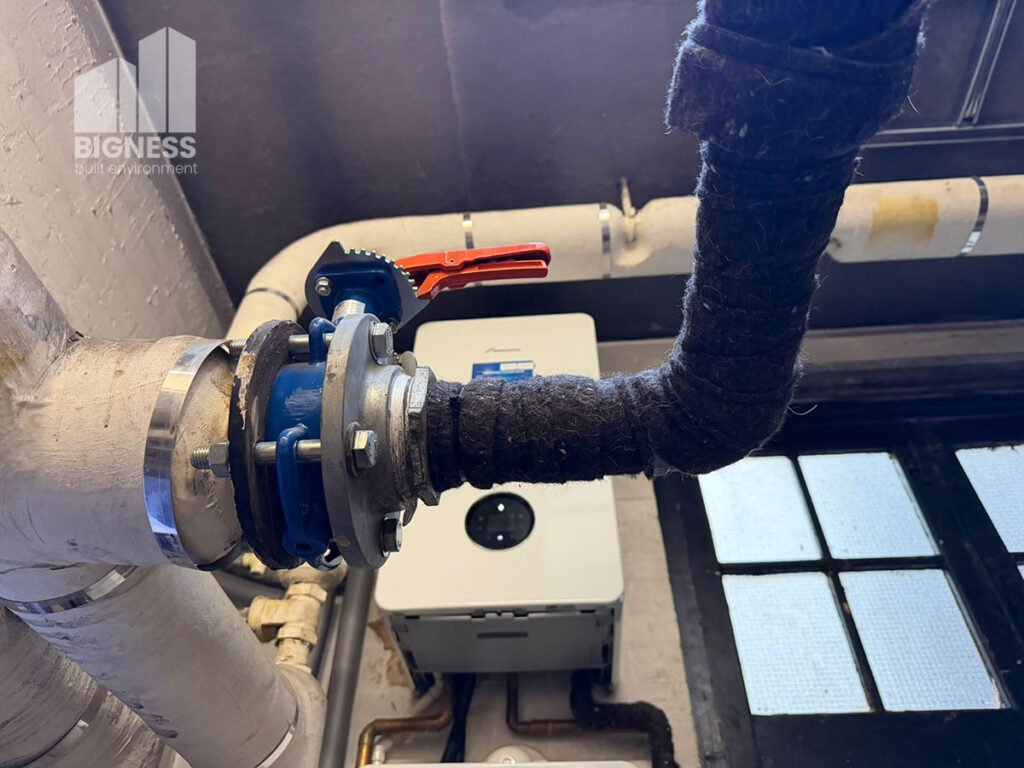
- installed an additional isolation valve; and
- inspected roof tanks and exposed pipework while creating an initial photographic condition record.
Essential Safety Works
The accepted works included:
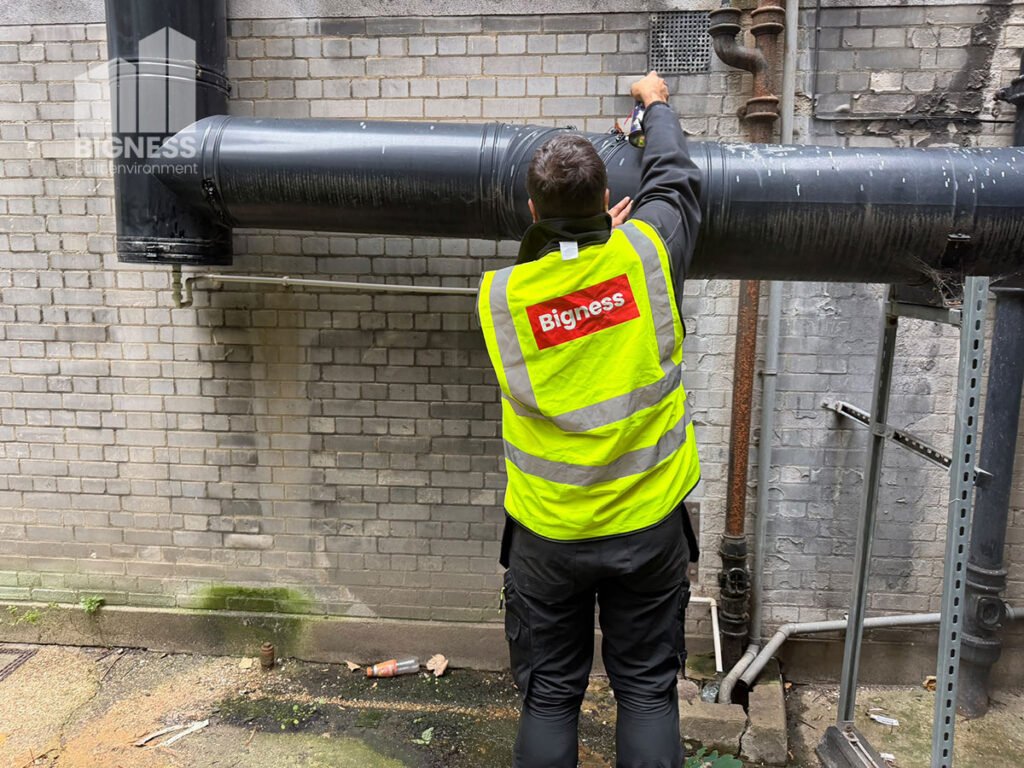
- dismantling and rebuilding affected sections of the communal flue;
- addressing the eight identified defective locations;
- replacing defective seals and gaskets;
- correcting the defective branch connection;
- removing accessible standing water and debris;
- rectifying the Potterton flue-temperature safety arrangement; and
- completing the required post-repair technical checks before heating recommissioning.
Competence & Specialist Responsibility
Bigness managed the agreed scope, programme, procurement and client coordination.
Gas work, combustion analysis, specialist safety judgement and applicable Gas Safety documentation remained with the attending Gas Safe registered engineer.
This reflects the wider Bigness responsibility model:
Bigness coordinates the building response. Specialist regulated work and technical certification remain with the appropriately competent party.
The original project record makes this division of responsibility explicit.
Documented Outcome
The project created more than a completed repair.
The building record included:
- an annual maintenance arrangement with two planned seasonal attendances;
- a Principal Attendance and Initial Condition Report;
- an initial plant and asset record;
- photographic condition evidence;
- a defined Essential Safety Works scope;
- separate scopes for further specialist and remedial requirements; and
- a clearer list of next maintenance and improvement decisions.
The objective was to leave the managing agent with a clearer record of:
what had been identified → what had been addressed → what still required a decision.
The Result
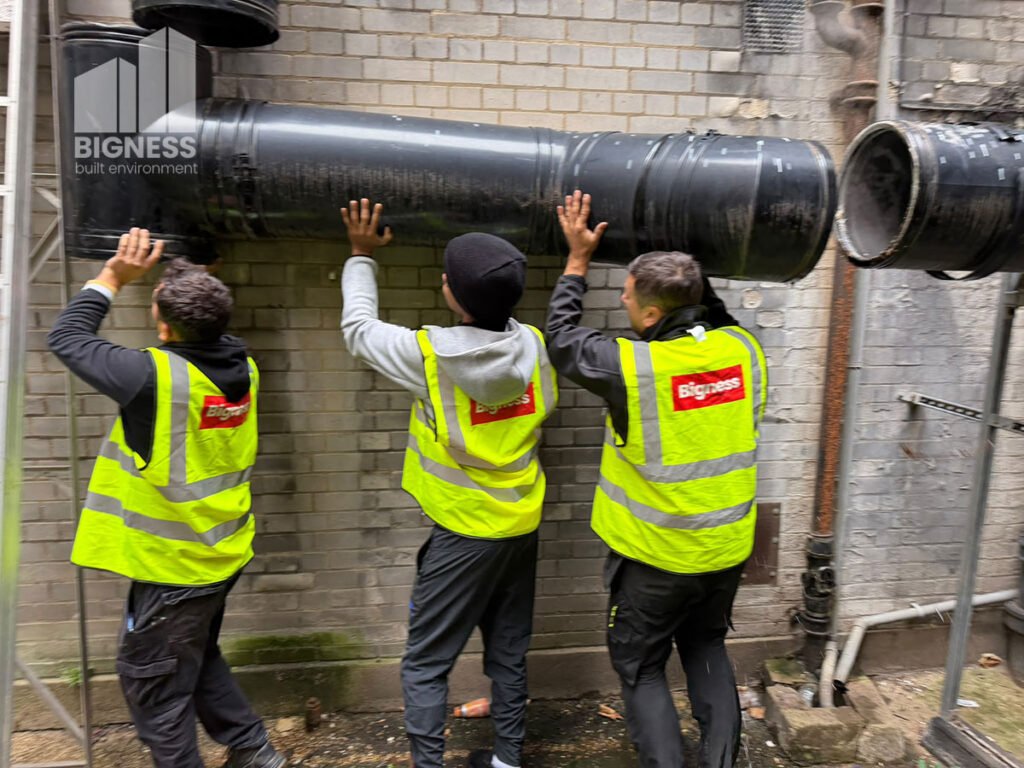
The three gas leakage points were repaired before servicing and further testing proceeded.
The accepted essential safety works addressed the identified communal flue defects and boiler flue-safety arrangement, allowing the communal heating system to return to operation.
The managing agent also received a documented view of the wider plant condition and separately scoped future priorities.
The project therefore achieved two outcomes
Immediate outcome
Restore the heating system following essential technical intervention.
Building outcome
Create a clearer basis for future maintenance, remedial works and improvement decisions.
Before / After
| Before | After |
|---|---|
| Three gas leakage points | Gas leaks repaired and subsequent testing undertaken |
| Eight defective communal flue locations | Accepted flue remedials addressed |
| Defective boiler flue-safety arrangement | Safety arrangement rectified |
| Heating awaiting essential intervention | Communal heating returned to operation |
| Multiple further plant defects requiring decisions | Condition documented and future actions separately scoped |
What Comes Next
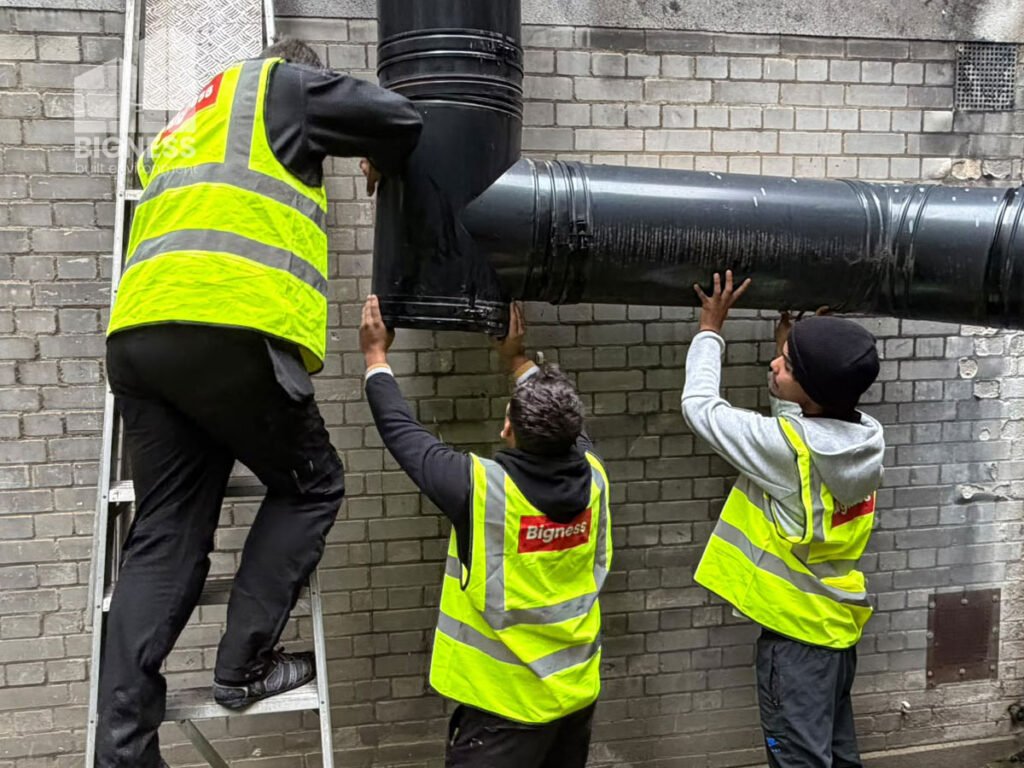
The initial intervention resolved the immediate requirement but did not treat the rest of the building as finished.
Further proposed priorities include:
- additional boiler fault investigation;
- external pipework insulation and weatherproofing;
- water-pressure improvements;
- cold-water storage and booster arrangements;
- improvement of restricted hot-water pipework;
- roof-tank cleaning and associated water-system work; and
- further review of heating controls and operating schedules.
These are proposed works and are not yet accepted.
The continuing programme connects the initial repair with:
Building Maintenance → Building Improvements → Managed Building Operations
rather than treating the original heating problem as an isolated contractor visit.
Project Metrics
3
Residential blocks served
3
Gas leakage points repaired
8
Communal flue defect locations addressed
2
Planned seasonal maintenance attendances each year
These figures are directly recorded in the project file.
The Bigness Principle
This project was not treated as an isolated heating repair.
Bigness connected the building’s immediate technical problem with:
investigation → prioritisation → repair → specialist verification → documentation → future maintenance planning
The immediate result was restored heating operation.
The wider result was a clearer basis for the managing agent’s next building decisions.
Need Help With a Similar Building Problem?
Tell us what is happening in the building.
You do not need to diagnose whether the answer is heating, plumbing, controls, compliance or another technical discipline before contacting us.
Fix a Building Problem →
Review My Building →
Project Gallery